These are some of the events I visited throughout the year
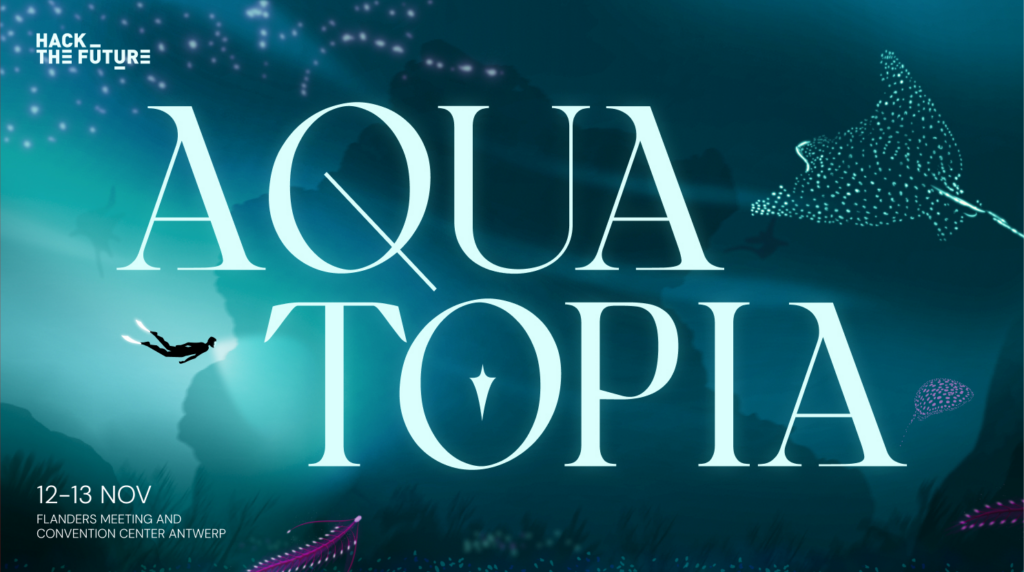
Hack the future 2025
I took part in the Hackathon Hack the Future!, and it turned out to be one of those days that’s both intense and genuinely rewarding. Together with my teammate Luka Chiapponi, I worked on the challenge titled “Leviathan’s Ledger.” The task was to decipher a collection of old maritime logs written by ship captains who had sailed across different parts of the world. These logs weren’t straightforward—many entries were vague, inconsistent, or written in a style that reflected the time period, which made interpreting them a real puzzle.
To tackle this, we used a large language model to extract meaningful data from the text. By identifying clues such as dates, partial coordinates, and contextual hints about locations, we were able to reconstruct approximate positions of the ships over time. It felt a bit like digital archaeology—piecing together fragments of information to form a coherent picture.
Once we had that data, we built a web application to visualize the journeys. The app mapped out the inferred routes, allowing users to follow the ships’ paths across the oceans. Seeing those routes come to life on a map was particularly satisfying, as it turned abstract text into something tangible and easy to explore.
Beyond the technical side, the experience was a great opportunity to collaborate, think creatively, and work under time pressure. It pushed us to quickly iterate on ideas and find practical solutions. Overall, it was a really educational and enjoyable day, and definitely one I’d be happy to repeat.
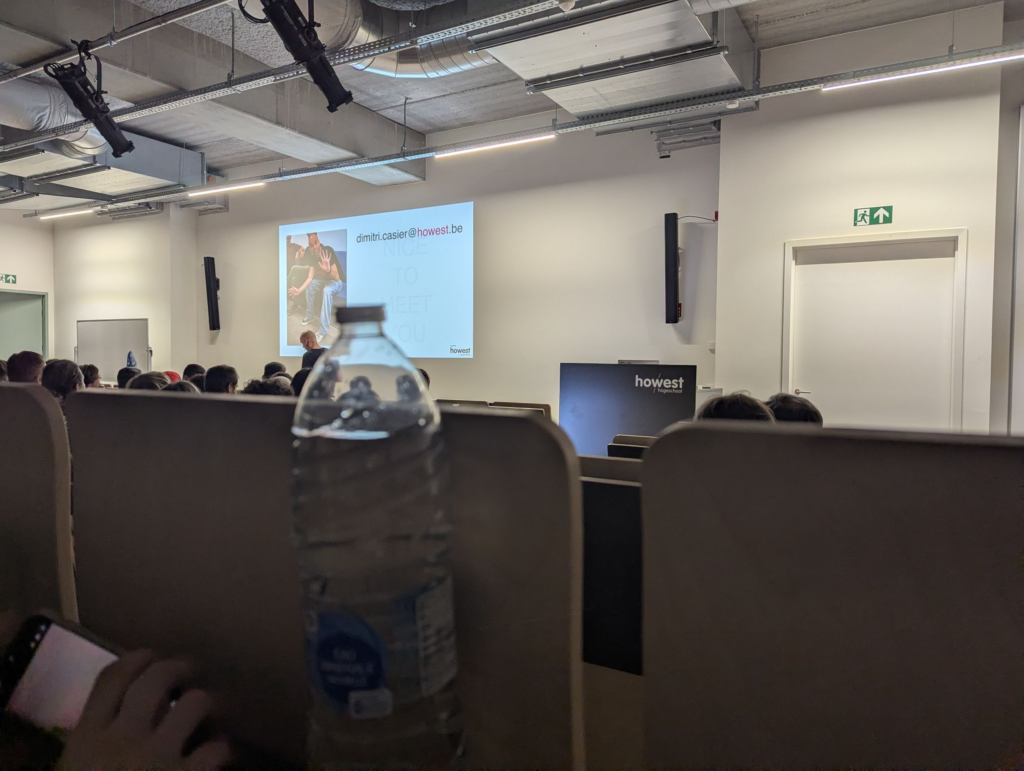
HOWEST Tech & Meet – Deepseek
“Call me Ishmael,” a phrase borrowed from Herman Melville’s Moby-Dick (1851), was how Dimitri Casier opened his talk—an unexpected but fitting way to frame a discussion about exploration, scale, and the unknown. In this case, the “whale” was DeepSeek, China’s leading large language model, and the broader ecosystem forming around it.
Throughout the session, Casier highlighted the unprecedented impact DeepSeek has had, not just within the field of LLM development, but across the wider tech landscape. He explained how the model pushes efficiency boundaries, making it possible to run powerful systems with fewer computational resources. Beyond that, he touched on innovations such as improved reasoning techniques and even experimental approaches like encoding context windows into images—ideas that challenge how we traditionally think about model inputs and memory.
Another key theme was the strength of open-source development. By comparing proprietary systems with openly available models like DeepSeek, Casier showed how transparency and collaboration can accelerate progress. Platforms such as Hugging Face were presented as essential hubs for this ecosystem, enabling developers worldwide to experiment, share, and build upon each other’s work without starting from scratch.
What made the talk particularly engaging was how it connected technical breakthroughs to a larger narrative of innovation and accessibility. Rather than focusing solely on benchmarks or performance metrics, it illustrated the journey DeepSeek has taken and the ripple effects it’s creating globally. Overall, it was a thoughtful and insightful session that offered both technical depth and a broader perspective on where AI development might be heading.
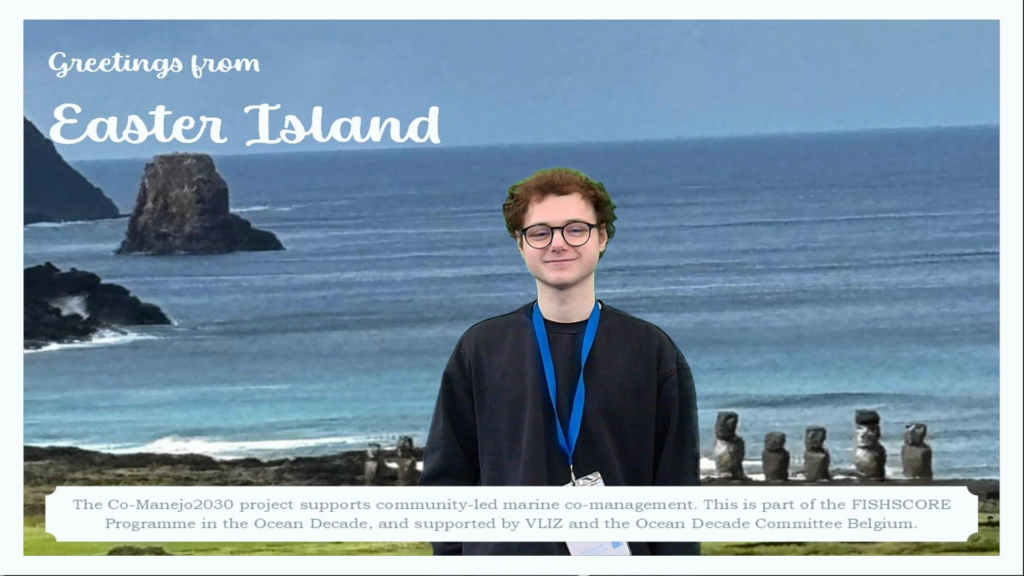
VLIZ Marine Science Day
Yesterday I had the opportunity to attend the VLIZ Marine Science Day as part of my internship at VLIZ, and it turned out to be a genuinely eye-opening experience. The event brought together a wide range of researchers, scientists, and professionals, all focused on advancing our understanding of marine environments. As an IT/AI student, stepping into that space felt both motivating and a bit humbling—there’s a lot happening at the intersection of ocean science and technology that isn’t always visible from the outside.
What stood out most was how deeply data is embedded in modern marine research. From predictive modelling of ocean currents to monitoring biodiversity and climate impact, it became clear that data science and digital tools play a central role. AI, in particular, is starting to support everything from pattern detection in large datasets to improving the accuracy of environmental forecasts. Seeing these applications in a real-world scientific context gave me a much broader perspective on how the skills I’m developing can be applied in meaningful and impactful ways.
Beyond the technical aspects, the day also highlighted the importance of collaboration across disciplines. Marine scientists, engineers, and data specialists all contribute different pieces to the puzzle, and it’s that combination that drives progress. It made me appreciate how valuable it is to be able to translate between domains—something that’s especially relevant in AI-related work.
Overall, I left the event feeling grateful to be part of an environment where technology and sustainability come together so naturally. It reinforced my interest in applying AI to real-world challenges, and I’m looking forward to continuing to learn, explore, and contribute throughout the rest of my internship.
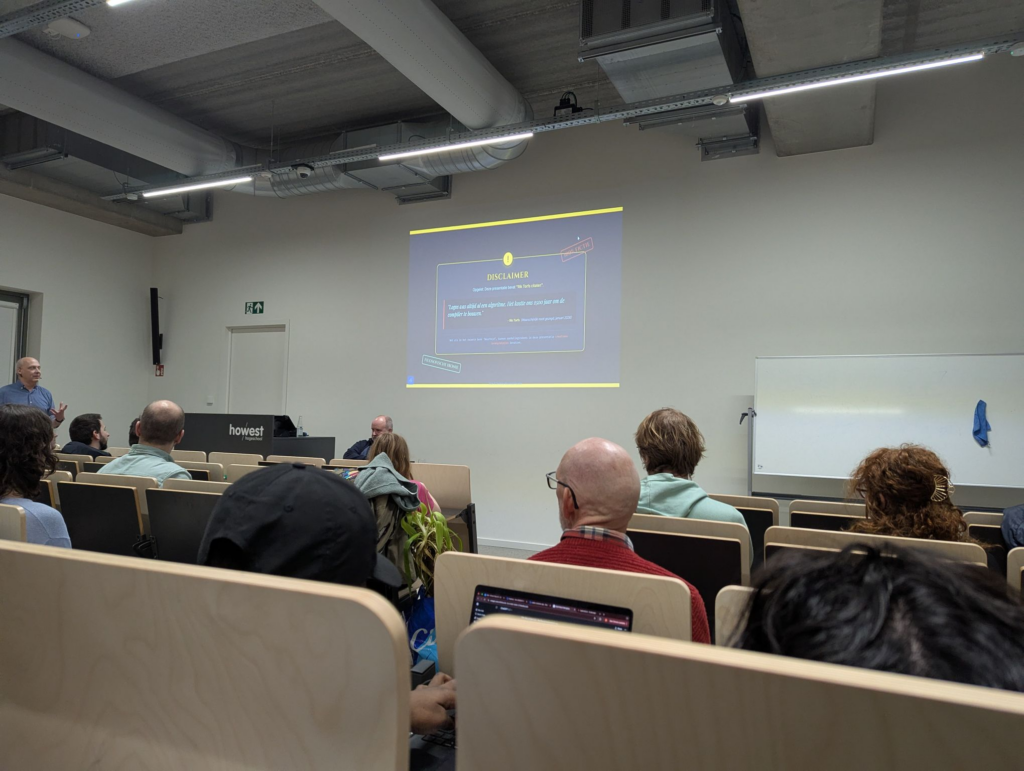
Howest Tech & Meet – Van Plato tot Vibe Coding
Recently, I had the opportunity to attend the Tech & Meet session “Van Plato tot Vibe Coding” at Howest, and it offered a surprisingly refreshing perspective on technology.
What made this session stand out was its unusual starting point: Ancient Greek philosophy. By drawing parallels between philosophical thinking and programming concepts, it challenged the way we typically approach technology. While that part was quite abstract at times, it set the stage for a deeper reflection on how we think, reason, and build systems today.
From there, the session transitioned into a historical journey through computing, which really brought everything together. We explored how technology evolved:
- From hardware-focused systems to software-driven solutions
- From mechanical machines to cloud computing and AI
- From foundational innovations to the cutting-edge tools we use today
Seeing this progression laid out clearly was a strong reminder that, despite how fast technology moves, many of the underlying principles remain consistent. The problems we solve may change, and the tools certainly improve, but the core ideas often persist over time.
For me, the biggest takeaway was the importance of understanding where technology comes from. Knowing its origins not only gives context but also helps in anticipating where things might go next. It’s easy to focus only on the latest frameworks or trends, but stepping back like this adds a different kind of clarity.
Overall, it was a thought-provoking session that combined philosophy, history, and technology in a way that felt both challenging and worthwhile.
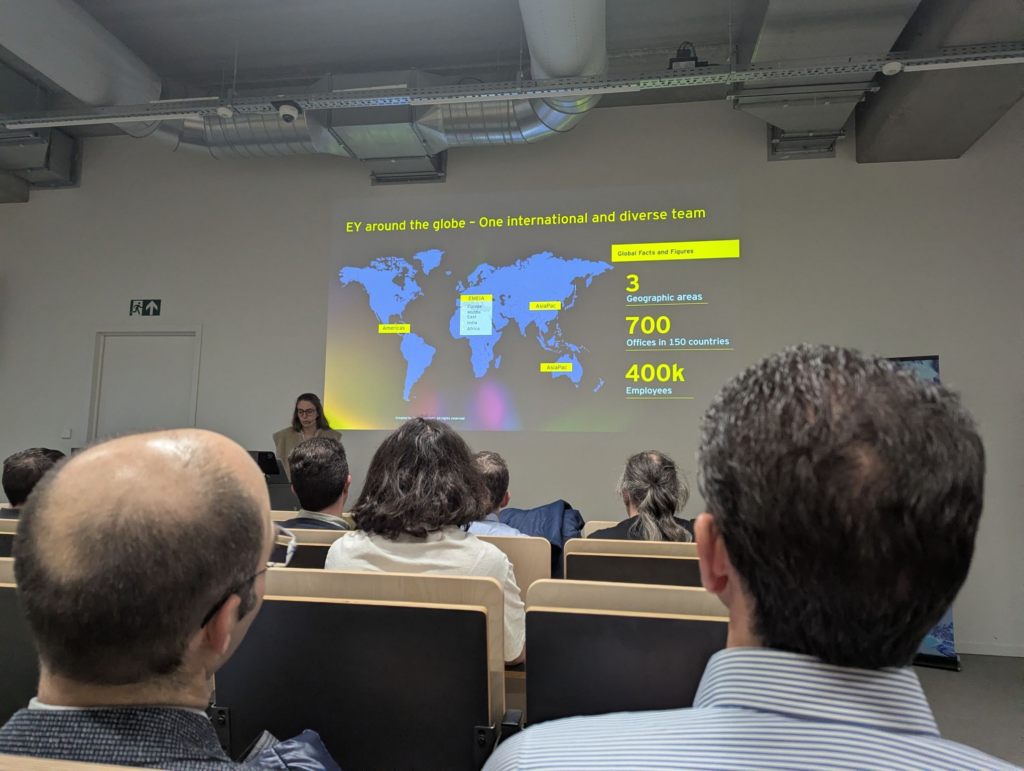
Howest Tech & Meet – Quantum Computing
I also attended a second Tech & Meet session at Howest, this time focused on Post-Quantum Cryptography (PQC)—a topic that feels increasingly relevant as technology continues to evolve.
The session explored a key question: what happens to today’s cryptographic systems once quantum computing becomes practical? Unlike classical computers, quantum machines operate on fundamentally different principles, which means they could potentially break widely used encryption methods such as RSA and ECC.
One concept that stood out was the idea of “harvest now, decrypt later.” Even if quantum computers aren’t fully capable yet, encrypted data can already be collected today and decrypted in the future once the technology matures. That creates a long-term risk that’s easy to overlook.
We also discussed the importance of crypto-agility—the ability to adapt systems quickly as new cryptographic standards emerge. Rather than waiting for a “Q-day” moment, organizations are already being encouraged to start preparing now. Regulatory timelines pointing toward 2030–2035 make it clear that this isn’t a distant concern anymore.
What I found particularly valuable was how the session balanced theory with real-world implications. It wasn’t just about understanding quantum computing, but about recognizing the practical steps needed today to remain secure in the future.
Key takeaway: even though the exact timeline of quantum breakthroughs is uncertain, preparation isn’t optional. This session definitely reinforced the importance of thinking ahead when it comes to security and system design.
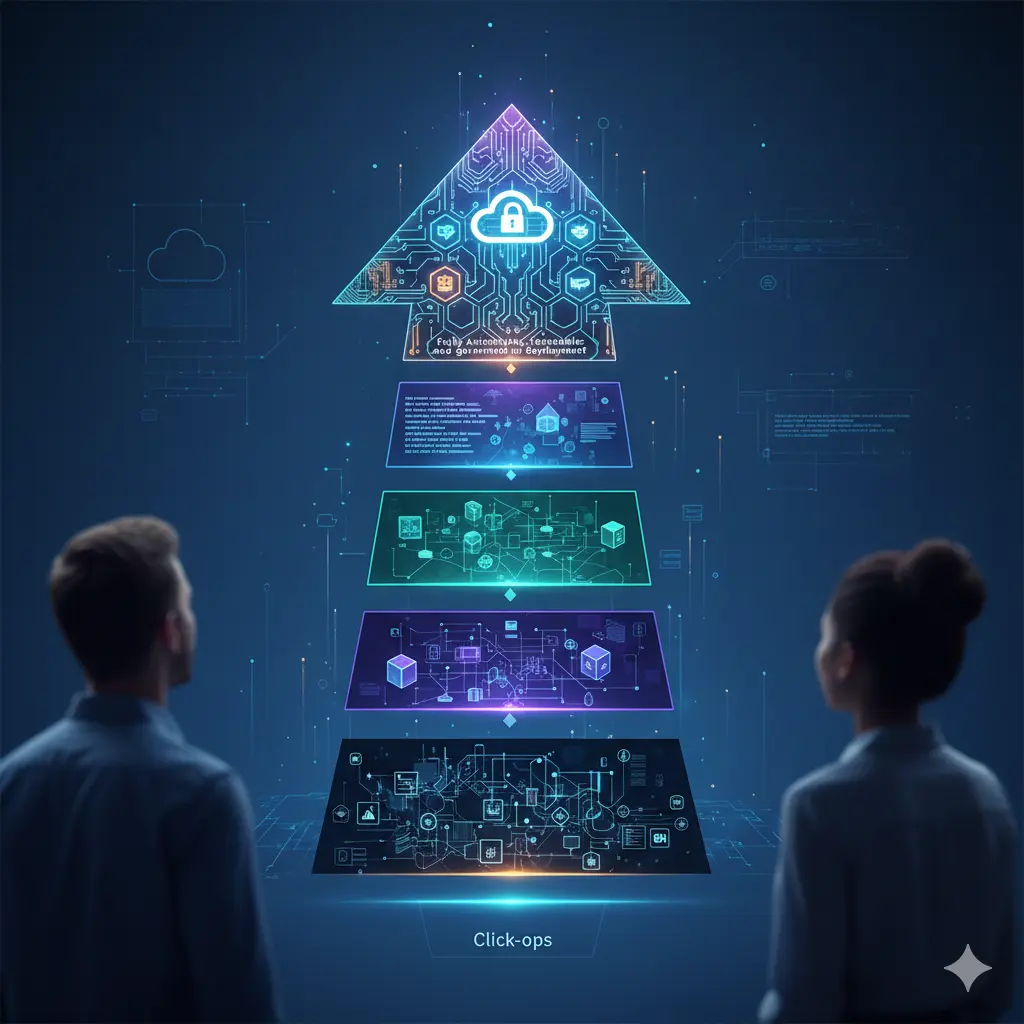
Howest Tech & Meet – The 5 levels of Infrastructure as Code
Attending the session on Infrastructure as Code (IaC) and Azure Bicep gave me a much clearer understanding of how cloud infrastructure management evolves from manual processes into fully automated and governed environments. The presentation by Tim Van Roosbroeck and Dimitry Decan was both practical and insightful, especially because they combined the perspectives of a software consultant and a cloud engineer.
One of the most valuable parts of the session was the explanation of the five maturity levels of IaC. I found it interesting how organizations often begin with “Click-Ops,” relying heavily on manual configurations, before gradually moving toward reusable templates, automation, and governance. The roadmap made it easier to understand that adopting IaC is not simply about using scripts, but about building a disciplined and scalable operational model.
The deep dive into Azure Bicep was also very useful. Before this session, I mainly viewed Bicep as another deployment language, but the examples demonstrated how it simplifies Azure resource management while improving readability and maintainability compared to traditional ARM templates. Seeing how modular and reusable deployments can be structured helped me better appreciate the importance of standardization in cloud environments.
Another key takeaway was the emphasis on governance and policy-driven infrastructure. The speakers highlighted how automation without proper structure can quickly become difficult to maintain at scale. Their practical insights showed how organizations can reduce errors, improve consistency, and support collaboration by adopting a mature IaC strategy.
Overall, this session strengthened my understanding of cloud automation and the role IaC plays in modern Azure environments. It also showed me that progressing toward higher levels of IaC maturity requires not only technical tools but also the right mindset, planning, and operational discipline. I left the session with a better appreciation of how automation can improve efficiency, reliability, and long-term scalability in cloud infrastructure management.